
How Project Activities Help Children Apply Knowledge in Practice
Applied learning
Why doing beats memorising
Ask any parent in Dubai or Abu Dhabi what stuck with their child from Year 3, and you will rarely hear a textbook chapter. You will hear about the volcano they built, the market stall they ran in dirhams, or the play they performed in three languages. That is not an accident. When children do something with knowledge, they own it.
Mathematics in action
Turning numbers into objects children can hold
Addition and subtraction stop being squiggles on a page the moment a child counts real objects. A handful of dates, a row of camel figurines, ten dirham coins on the table, these all give a number physical weight. When a child moves three dates to one side and four to the other, then counts seven back together, subtraction becomes obvious rather than mysterious.
Good project work stretches this further. A class shopping project, where children plan a small budget in AED, price items and calculate change, packs fractions, decimals and mental arithmetic into one activity. According to project-based learning researchstudents who spend regular time on applied tasks outperform peers in problem-solving assessments, even when raw drill scores look similar.
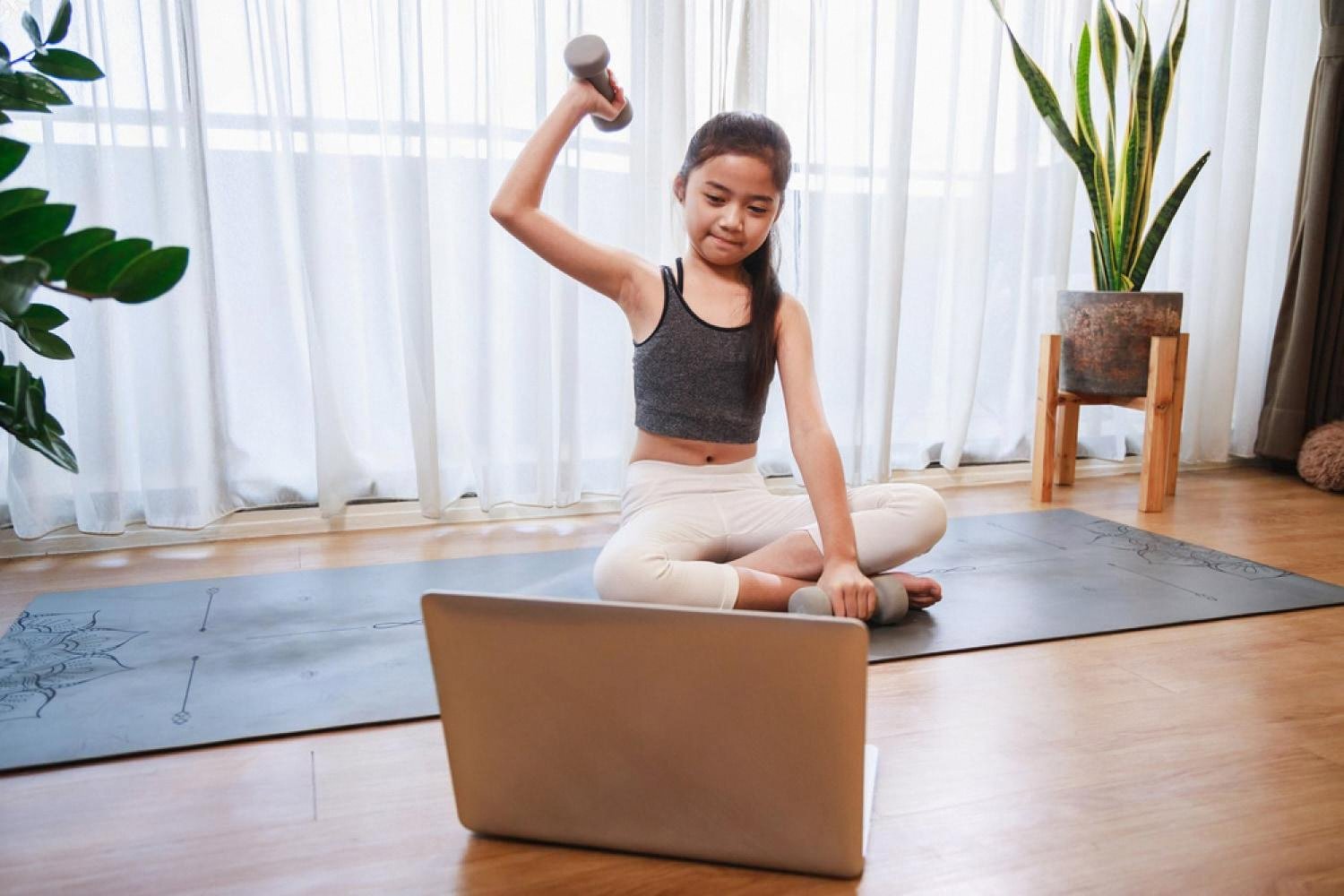
The key is that the child is not solving a maths problem. They are solving a real problem that happens to need maths. That shift changes motivation entirely.
Chemistry and science
Experiments turn theory into visible magic
Ask a nine-year-old what happens when you mix baking soda with vinegar, and if they have only read about it, they will guess. If they have done it, they will describe the fizz, the smell, the way the balloon on top of the bottle inflates on its own. Chemistry stops being abstract the moment two substances meet in front of a child and change.
This is why practical science is such a fixture in the better indian schools in uaealong with British and IB campuses across the country. Colour-changing cabbage juice, salt crystals grown on string, simple electrolysis with a battery and two pencils, these small experiments do something a textbook cannot: they let the child predict, test and be surprised. Surprise is the part that locks a concept in place.
Safe experiments to try at home
- Baking soda and vinegar volcano in the kitchen sink
- Growing salt or sugar crystals over a week
- Separating pepper from water with a drop of dish soap
- Testing which household liquids conduct electricity with a low-voltage buzzer kit
The parent’s job is not to explain everything. It is to ask, before the experiment, “What do you think will happen?” That single question converts a fun moment into a scientific one.
Languages
Speaking beats writing when it comes to fluency
Grammar tables teach children how a language is built. They rarely teach children how to actually speak it. That comes from ordering karak from a friend’s parent in Arabic, arguing over a football rule in English, or explaining a science project to a classmate in Hindi. The UAE, with its extraordinarily diverse populationis one of the few places on earth where a child can practise three languages before lunchtime without ever leaving the school gate.

Project activities amplify this. A group presentation where children interview grandparents about their home country, then present findings, forces real listening and real speaking. A drama club that stages the same short play in two languages doubles vocabulary in a term. A cooking club that follows a recipe written in Arabic teaches food words, imperatives and measurements at once.
The classroom becomes a live language lab because the children next to them are native speakers of a dozen tongues. A child asking a friend how to say “pass the ruler” in Malayalam is doing more real linguistic work than an hour of vocabulary drills.
Three practical wins from project-based learning
Deeper memory
Knowledge attached to a physical action or a real conversation stays longer than knowledge read from a page.
Transferable skills
Planning a project builds negotiation, budgeting and time management alongside the core subject.
Genuine confidence
A child who has actually built, spoken or measured something answers questions without hesitation.
The takeaway for UAE parents
You do not need a lab, a smartboard or a specialist tutor. A kitchen table, a bag of coins, a curious question and a willingness to let the child lead is enough. Choose a school that treats project work as core teaching rather than a Friday extra, and support that at home with small, regular applied tasks. The child who does maths, science and language will always outrun the child who only studies them.
Frequently asked questions
What is project-based learning in simple terms?
It is a way of teaching where children learn a subject by working on a real task instead of only reading or listening about it. Building a model, running a mock shop, staging a play or growing a plant are all common examples.
The subject content is still there, but it is embedded inside something the child actually does, which makes the knowledge easier to remember and easier to use later.
At what age should children start hands-on project work?
Very early. Toddlers already learn through sorting objects, pouring water and building blocks. Formal project activities start being useful from around age five, when a child can follow a two or three step plan.
By age eight or nine, children can handle week-long projects with a written plan, a budget and a presentation at the end.
How can parents support applied learning at home in the UAE?
Turn everyday errands into small projects. Ask your child to calculate the bill at the supermarket in dirhams, to read the Arabic labels on packaging, or to help plan a weekend outing including timing and cost.
Keep a small box of practical items at home: measuring cups, a magnifying glass, coins, a notebook. These beat any app for building applied skills.
Do international schools in the UAE use project-based methods?
Most of the reputable British, American, IB and Indian curriculum schools in the UAE include significant hands-on and project-based work, especially in primary years. The IB Primary Years Programme is built around it.
When choosing a school, ask to see examples of recent projects and how often lab or field work happens. That tells you more than any brochure.
Which subjects benefit most from practical activities?
Mathematics, all sciences and languages benefit the most, because each one has an obvious real-world application. Maths becomes measuring, science becomes experimenting, and languages become conversation.
History and geography also benefit strongly through model-making, mock debates and local field trips, which are easy to organise in a country with the cultural and geographical variety of the UAE.
How much time per week should be spent on hands-on learning?
Research and classroom experience suggest that at least three to four hours per week of active, applied work across subjects produces noticeable gains in retention and confidence.
This does not need to be one long session. Short daily practice, ten to fifteen minutes of applied maths or spoken language at home, works better than a single long block.

“Stop chasing the money and start chasing the passion.”
— Tony Hsieh